Tuesday, March 17, 2009

Make it better

The other day I saw a bumper sticker, "Veterans for Obama," affixed to a car with handicap license plates. Assuming the handicap was earned in the service, I wonder what the driver of that vehicle makes of the latest news from his hero.

In the late 20th Century, America was a land governed by lawyers. They would make their case / suggestion / point and leave it at that. Nowadays we are ruled by Ivy League professors who happen also to be lawyers and they are - of course - more intelligent and diligent than mere attorneys.

So when the proposal is made, "Let the war wounded heal themselves," the old-style politician would have thought his work was done. Brilliant idea, it's on the table, done. But the new class of leader has the facts and figures to prove it will be worthwhile to allow the wounded to heal themselves. He is prepared to argue a full case in the court of public opinion. In this case we save $540 million if we cut off medical support to veterans. Awesome. Case closed.

You see the difference between an Ivy League law professor and an ordinary attorney? And yes you can put a price on suffering. Juries do it all the time. Don't look so shocked.

Not being a professor, I tend to wonder about how things will be implemented, however.

What will the veteran have to do to get the same level of medical care afforded to civilian Obama voters? The vet could pretend to be an indigent civilian but when the screener asks where the condition arose, he would answer "war" and be disqualified from government assistance. Oops.

The solution appears to be: (1) go to an emergency room (2) speak no English (3) present forged ID. Or, veterans could simply perform back-alley operations on each other.

Whatever their choices, the savings to the government will be substantial. Enough money will be freed up for earmarks, bailouts, federal funding for community activism. Perhaps enough servicemen may still remain motivated enough to safely ferry Obama, Reid, and Pelosi about in their military aircraft of choice.

This government is all about savings - but the right kind of savings.

Wednesday, March 11, 2009

A bean ball hits the beantown

Looks like Boston is shaping up as a one-newspaper town - with that paper being Murdoch's. Lovely.

Tuesday, March 3, 2009

A Gordon Brown moment

To celebrate his visit, a little something from Private Eye.

Friday, February 27, 2009

Political automobiles

People nowadays like to make political statements with their cars (witness the hybrids) but there was a time when the very name of the car was politically charged.

The interwar ideological struggle between democracy and tyrrany somehow played out in the marketing department of Studebaker, where they made Dictators, Commanders, Dominators, Champions (enemies of Dominators?), and Presidents. They showed a taste for executives of all persuasions.

The People's Car, on the other hand ("Volkswagen") left no doubt that one identified with the masses from either a red or brown standpoint.

For parliamentarians, the Premier auto company made Premiers, but not enough to survive the rising tide of fascism.

After the war, there seems to have been a monarchist boomlet: you could express these tendencies in an Austin Princess or with a Ford Monarch. (I like the ones with the giant crown in the grill.)

Nowadays, Asians have developed a taste for republicanism: Australia's HSV makes a Senator and Nissan makes its own President (with no nod to Studebaker).

The Red Chinese you would expect to name cars "Liberator" but this name has been taken by bourgeois Greens naively playing at revolution. In fact, China is set to export cars made by Chery to the US and these lack political nomenclature. Like Chery itself, they seem to have been named by Pee Wee Herman. There's Karry and Tiggo and Riich. (A car named Riich might be a political statement for a Red automaker - can't rule that out.)

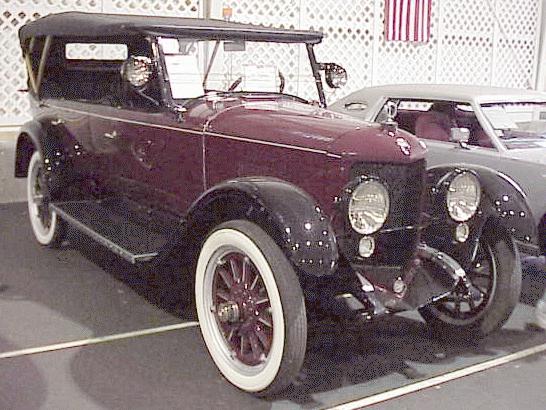
The best Chery auto name transcends politics. It transcends everything. It's the "Eastar Cross."

(That's its picture topside.)

The serials: Talk radio ruining the right?

An editor of National Review, of all people, is moaning about talk radio ruining the right. In other words, the dumbed down, culture-free, newspaper-quality, middlebrow National Review represents a standard to which lowbrow talk radio should aspire.

I was reading a back issue of Modern Age this weekend, marvelling at its eternal excellence while lost in a piece about Germany's biedermeier literature - literature I last enjoyed as a teenager and with which I associate many happy memories.

There was a day when a shorter version of the same piece might have appeared in the NR. No more: Buckley's creation has relentlessly moved downmarket. "Don't let them immanentize the eschaton," once NR's proud rallying cry is mere gibberish to the middlebrows cranking out a short ration of two-syllable analysis for what must surely be the upper tier of talk radio listeners.

In that they are much less adept than say Rush Limbaugh who harnesses not merely verbal skills but an admirable literary sensibility to his enormous analytic capacity. He does this live, in real time, putting out the same "product" as NR but of a higher quality, more copiously, and cheaper.

This comparison is apples-to-apples despite what any of today's NR editors may think. The editors currently in charge have made of NR a single product company and their product competes with talk radio. It competes poorly, in fact, because Rush and the better talkers understand their medium much better than NR understands print magazines.

Have you ever picked up a copy of the venerable Spectator? I don't mean the American Spectator (which should out of decency revert to its original name of the Alternative), I mean Britain's Spectator. Just look at the ads to understand the difference in audiences. Gallery reviews; composed music; serious books discussed seriously.

Recently, Standpoint appeared on American newsstands, an excellent new British conservative magazine that the American conservative political movement would find baffling and esoteric. (I'll devote a little space to it soon.)

National Review consciously engineered a downward shift in its appeal to a wider audience. This happened just as Rush appeared on the scene. There should be enough institutional memory at NR to recall there is a conservative highbrow market as surely as there is a lowbrow market and that NR itself is splitting the difference, not out of choice, but because it is staffed by people of limited culture and insight who do not understand their own medium, much less others'.

Monday, February 9, 2009

A leader spams his people

Endless junk mail from the chief executive of the United States. Empty, meaningless "communication." More on the way.

Creepy behavior from the new president.

Truth and reconciliation in the Madoff affair

When bad things happen, there is a bureaucratic drive to limit the scope of the story to the narrowest possible definition of the event.

In the case of the Madoff swindle, Madoff's many financial accomplices have been shielded from scrutiny. Hat tip to Valdis Krebs who is reconstructing the channels that delivered clients into the inferno. As journalism takes its rest, bloggers must step in.

Do not do business with Madoff's accomplices.

Thursday, February 5, 2009

Excommunicating the Pope

When politicians demand of the Pope various Roman Catholic excommunications, we should at last understand that nothing is allowed to fall outside of the realm of politics. The government will determine who is in communion and who is not just as it determines who is using too much oxygen or releasing too much carbon dioxide.

Further, when the Pope fails to excommunicate on political command, he is in breach of the public trust and may himself be politically excommunicated by various elected leaders. Such an attack on religious institutions is perfectly in keeping with the scope of Europe's parliamentary dictatorhips.

Don't worry about the Pope or the Church; the political psychosis of the age is the greater concern.

A trade called "journalism"

From the indispensible Politico:
A reporter was escorted out of a White House event by Secret Service agents on Wednesday afternoon after he approached President Obama to seek an autograph.
Politico was founded to deliver the political reporting not available from major U.S. newspapers. This story is archtypical in that the press at large is pleading for autographs and the Politco is observing and reporting on them.

More please.

Best Totalitarian headline of the day

For yesterday from the Kansas City Business Journal: Obama plan will create or save 73,000 jobs in Missouri, 35,000 in Kansas

Hard to pick out a "best totalitarian line" from the "story." The piece presents a White House press release as news with no additional reporting whatever. Claims made in the handout are presented without qualification.

Down with obstructionism!

For today from the Chicago Tribune:

Joliet artist works on behalf of proposed labor law

Best totalitarian line from the story:
The Joliet artist recently completed a painting depicting President Barack Obama holding a copy of the Employee Free Choice Act—complete with his signature. The act has yet to be passed by Congress, but Farrell and union leaders hope that day will come soon.
Soon the workers will triumph.

Friday, January 23, 2009

Taking the oath

As every schoolchild in America knows, the end quickly came for Wallenstein when he had his officers take an oath to him personally rather than the Hapsburg emperor or Holy Roman Empire. The emperor understood the significance of the act immediately and responded.

In this U.S. polity, the people are sovereign and the equivalent offense would be an oath given to a person to the exclusion of the institutions of the people (the collective sovereign).

The end of Wallenstein having been immortalized in theatre, opera, literature, and painting, would-be oath givers like Hitler, Franco, Mussolini, et al, had to walk softly. Thus the Hitler oath for civil servants contains caveats:
I swear: I will be faithful and obedient to Adolf Hitler, Führer of the German Reich and people, to observe the law, and to conscientiously fulfill my official duties, so help me God.
The law and duties make this more than just about Hitler, you see. Likewise, Franco and the clerics:
I swear and promise to respect and make my clergy respect the chief of the Spanish State and the government established according to Spanish laws.
This kind of circumspection is not present in the current celebrity oath for Obama. Currently on viral video it reads:
I pledge to be a servant to our president and all mankind because together we can, together we are, and together we will be the change that we seek.
It is a simple oath: I pledge... because...

This is even more trouble than Hitler and Franco were willing to ask for.

Thursday, January 22, 2009

Best totalitarian headline of the day

From Time magazine, "Barack Obama's Inaugural Address: Humility, Gratitude, Sacrifice."

Best totalitarian lines from the same story:
And then he brought it all together, the challenge and the duty and the promise: "What is required of us now is a new era of responsibility — a recognition, on the part of every American, that we have duties to ourselves, our nation and the world, duties that we do not grudgingly accept but rather seize gladly, firm in the knowledge that there is nothing so satisfying to the spirit, so defining of our character, than giving our all to a difficult task." This was the day's catechism and call to arms.
We will perform our assigned duties gladly. There is nothing so satisfying as giving our all to the government's tasks.

Wednesday, January 21, 2009

The Serials: changes in news reporting

A popular meme on the right is that liberalism is losing newspapers their circulation. If it was ever true, it's not true now.

The slimmed down circulations have left papers with their core audience: middlebrows who buy bestsellers; who learn about trends from feature articles; who buy things based on lists and rankings; who search out tips on what to eat, to wear, and of course what to believe.

These middlebrow masses, listening to NPR, watching PBS, reading their newspapers and newsweeklies, are the bread and butter of an entire sector of the economy. The corporations who own and run big daily newspapers are very interested in pleasing this core audience. Expect papers to become more liberal as outlying demographics fall away. As costs are trimmed, one must serve the essential reader.

This dynamic is showcased in the changes happening at the newsweeklies Time and Newsweek. It's interesting to hear editors describe their patrons:
Meacham [a Newsweek editor] , wearing a dark sweater in his office overlooking Central Park, says that "we don't edit with the idea that there is a poor and uninformed reader out there who somehow needs illumination." He sees his audience as "the virtual Beltway," which he defines as people who watch Sunday talk shows, read newspapers and buy hardcover books.

Stengel [a Time editor], wearing a dark sweater in his office with a view of the Hudson River, says his philosophy, especially online, is "news for smart people. . . . We are arguably the best-known news brand in the world, and we want to leverage that."

Teaching point: Smart people buy hardcover books.

You have to translate "smart" here as brand-conscious consumers "who think they are smart," e.g. people of limited culture who are compensating with "must read," "must see," and "must hear," consumption. These tend to be high achievers, woefully overspecialized, whose hardcovers adorn some a prominent coffee table or bookshelf.

I remember during the last campaign, former Time editor Strobe Talbot's special friend, Hillary Clinton, stumbled over the pronunciation of President Medvedev's name settling on national TV for "Whatever." Mr. Whatever. Mrs. Clinton is that reader newsweeklies and newspapers must hold on to - someone not likely to have ever heard Medvedev's name in natural conversation, someone relying heavily on a trusted guide, an interpreter to help negotiate politics, culture, art, and technology.

Consider ever-increasing leftiness the beginnings of a long circulation drive:

Stengel says his goal is to "make Time lead the conversation, not follow it. To speak stronger with a point of view. To mix more analysis with reporting. Not to ask questions, but to answer them on the cover"
Any attempt to shame news organs into professionalism by references to their conduct during the Obama-McCain race misses the changes taking place.

This is "the new normal." "Professionalism" means serving the news corporation's customers better.

Best totalitarian headline of the day

From the Toronto Star: "Obama touches every base for the masses."

Best totalitarian lines from the same story: "A hush fell. More words – 17 minutes of words. And the Poet-in-Chief hit every mark."

Runner up: "Where the teeming masses stood, the passing of power came as crescendo, with fluttering flags and frenzied joy."

News bulletin: The poet-in-chief inspires frenzied joy.

Natural conservatives

Judge Bork was being interviewed on C-Span this week when the president of the Federalist Society tried to pin the Burkean tag on him.

In his (usual) brusque way he shrugged it off opting for something else. Don't ask me what he called it because I became distracted by his example of what it is not. The current debate over "true conservatism" - an ideological construct - he noted is not for him and probably not for Burkeans or conservatives.

If you go to the newer election-inspired "conservative" blogs, you see a lot of this non-conservative paradigm hunting going on with all the jiggery pokery that calls up.

Ayn Rand's taunt, "Conserve what?" is germane here. Either you go down the path of philosophical analysis with Objectivist-like rigor and face the consequences or you declare yourself, as I do, someone who feels himself conservative. You don't split the difference by producing a half-baked paradigm (Libertarian Party) or by negotiating lists of "principles" that are platform planks (conservative splinter groups).

Unlike Ayn Rand or her target Bill Buckley or today's "true conservative" discussants, most of us are not building, defining, or even joining a movement. We are just being ourselves and "feeling conservative" is as far as many need to go. In arguments with the paradigm hunters, I am told that this attitude lets all sorts of Lincoln Chaffees lurk within the movement.

This is a "top-down" view of the issue. The bottom-up view is to let like minds associate for political benefit, then deal with trouble as it comes.

Bork's point, if I extrapolate a little here, is that there may be something we could call a natural political conservative.

We encounter so many natural (non-political) conservatives in daily life that I wonder why movement-minded people don't do something with them, as many of them are already affiliated or organized by interest. Think of those who own classic cars; who collect antiques; who restore buildings, who raise "heritage" breeds, who restore paintings. The list could go on. (Obviously in this matter, gun owners and shooters have already found their political voice.)

So there is real work available for those arguing out definitions of "true conservative." Why not organize natural conservatives instead?

Tuesday, January 20, 2009

What next?

The meme among refuseniks just now is that the Obama charm offensive is prelude to the boom being lowered. The policy boom, the tax boom, the agenda.

There is an implied change: Obama gets ugly.

I disagree. Based on this man's love of political theatre and the rewards he gets playing this way, the grandstanding, the "healing" gestures, the conservative outreach, all that stuff that generates a honeymoon for him will continue. The real dirty work will be done by the overt partisans in House and Senate. The White House will keep its distance. The inauguration will continue for four years.

At the same time, Obama has taken control of the party at the secondary level. The Clinton retreads may look influential but in true politruk style they have Obamans working under them, watching them, waiting to replace them. Count Clinton teamsters still in place a year from now.

And we know a new party-building effort is about to begin at the grassroots level using recent campaigners as its core. It promises a cult of personality that will cut out the political middlemen and place a vast political/cultural force directly at the disposal of our new boss.

As Obama plows through rosy accolades, we refuseniks will be getting the Rodney King treatment off to the side. Harry and Nancy have the truncheons ready as do the state Democrats.

This is really going to smart. We'll be fingering our achey lumps while meditating on those purists who sat out the last election.

Best totalitarian headline of the day

From today's Boston Globe, a New York Times Company: "Masses share in Obama's reward."

Best totalitarian line from the story: "Obama's declaration that his own historic rise is as one with America's past is an act of generosity - one that will give his country a new burst of strength."

The leader gives his people strength. The leader shares his rewards.

Thursday, January 15, 2009

A trade called journalism

A front page article in today's Washington Times (written by Julia Duin) opens with, "A variety of religions will be whooping it up this weekend ..." It's part of a series called "Waiting for Obama."

Get your whoop on, holy man: Obama's coming to town.

In the Great Chain of Newspaper Being this remark about whooping religions passed through the desk editor, copy editor, and front page editor without incident before landing in the print shop.

Unfortunately, the print shop does not apply quality control to newspaper content. Perhaps that needs to change.

Monday, January 5, 2009

Nutshell department

From today's Daily Reckoning:
Finally, thanks to the worldwide financial meltdown that the U.S. central bank helped bring about, the politicians can take control of America's most important industries. The dreams of central planners, meddlers, world-improvers, collectivists, Bolsheviks, corporatists and fascists are all being realized - right in the United States of America. All industries need money. And the U.S. Treasury department has it. And what it doesn't have, the Fed will supply.
From Saturday's Valleywag:
Incompetence and infighting are endemic to nonprofits, of course. But Wikipedia's bureaucracy is distinctly, fearsomely awful. The site, which dictates the online reputation of countless living people and companies, itself operates by rules that are completely incomprehensible, determined by a self-appointed group of volunteer editors who can seldom stop arguing over obscurities to explain their ways to outsiders.
And some sure signs of recession: counterfeit Bentleys and Rollers on eBay.

Thursday, December 11, 2008

"Stupid" corruption

There is a kind of comment that keeps popping up in corruption coverage.

The corrupt, or indecent, or illegal act is labeled as "stupid." "Stupid" is -with some people - the only pejorative they'll use, along with perhaps "inappropriate". Pay close attention to the people making a display of how offended they are at the "stupidity" of the "inappropriate" act. They're telling us something about themselves.

Can we classify folks focused on the stupidity-of-risking -detection as being of the same ilk as the perps?

I do. Without exception. Try it yourself.

p.s. I notice just now some are on a "crazy" bender. Advice to international media conglomerates: when your on-air talent (or your ink-stained wretch) declares Blago "crazy" instead of immoral mark the speaker or writer down for an expense report audit. You won't be disappointed.

Tuesday, December 9, 2008

Gossip mongers take the lead

The political blogs and pundits have been asleep today (probably hanging back to keep everything responsible), so this Illinois corruption reporting and analysis has fallen to gossip columnists - and it may be their finest hour. (See here, here, here and here to start.)

Tip for the political blogs and pundits: all you have to do is read an affadavit to develop your material.

Go Gawker. Thank you, Smoking Gun.

Monday, December 8, 2008

The bone-chilling voice of pragmatism

A Republican denounces conservatism:
My experience is that conservatives do not ... see that peoples ... always seek someone to offer them a vision of how and why to live. They will seek this from whatever institutions happen to exist near them. And they won't be concerned that the documents that facilitated the formation of a particular institution might not have set forth that role as being a role for that institution to perform.
A professional conservative denounces small government: "Small isn't beautiful".

Wednesday, December 3, 2008

Help for the dispossessed

From today's copy of The Hill newspaper, page 46, a classified ad:
Change Can Be Difficult

Psychotherapy for the Politically Displaced

By appointment only in Bethesda, MD; Completely Confidential

Aliza Lerner, LCSW-C, [telephone number]
(Capitalization as per the original.)

Tuesday, November 25, 2008

Resolved: We the people defer our constitutional crisis

It's rather remarkable, once you add it all up.

The lowest rated Congress in history (is it still at 10% approval?) working in tandem with the lowest rated president in history is spending the largest amounts of money ever seen in history.

The Daily Beast has it in a phrase: the Never-ending Bailout. Indeed what it is.

This effort is helmed (would you believe it) by a Princeton economist and a private banker. I heard they ladled out $800 million in the soup kitchen yesterday.

Here we have an academic who has spent his life nodding blankly in the faculty lounge or on Fed boards during breaks from his higher calling: promoting failed, nonsensical models of how economies work. Meanwhile, his colleague at Treasury spent his entire career as a salesman at Goldman Sachs. Peddling product and as he says, taking care of the customers (who are now comin' a beggin').

You say you want economic insight? How about expertise administering untold trillions in handouts? I give you a salesman running Treasury. This fellow, if he learned anything about economics at all, did so accidentally over lunch. He gathered mere crumbs of that same drivel spooned out by the Bernankes of the world - a tiny portion of droppings left by the Great Army of Pleasantly Respectable Incompetents.

You can laugh at it all, as they do over at LOL Fed (the picture above is from that site), but the corollary to scorn would, in a normal polity, be constitutional crisis. We deserve one at this point.

And here it gets interesting.

In the truly extraordinary arrangements made to hand out staggering amounts of cash with an absolute minimum of strings attached, the humblest citizen understands that a constitutional milestone has been passed, that one phase of constitutional history has eneded and another has begun.

Here we would do well to consult the late Carl Schmitt who taught us that actual sovereignty rests with that individual or agency able to declare rule by exception. Unfortunately, the LOL team at the head of the Fed and Treasury are ruling by exception.

The good news is that Congress exercised the power before delegating it to the LOL team and it stands poised to take it back, after additional oceans of cash have been squandered.

Even at 10%, Congress remains an embodiment of We the People - of the people's sovereignty. A next step in the process, and who knows what the trigger may be, could conceivably be popular sovereignty asserting itself against Congress and other elected institutions. Not just in Icelandic-style rioting to fire failed politicians, but as it was imagined in early state government making. There, the people reserved to themselves to make whatever changes were needed to the constitution or government by whatever process pleased them, whenever it pleased them, whether or not it was reflected in the foundational laws.

As Christian Fritz points out in American Sovereigns, these early Americans viewed sovereignty as immune to rule-making or constitution drafting. As a lawyer once told me, "You can't sign away your rights."

After the LOL team has spent away two or three generations' worth of tax income -say in another week or two - maybe we should sign away their rights while asserting our own.

This spells fret time for movement conservatives who, to defend themselves from liberal government, have erroneously enshrined the Constitution above the Declaration.

Every assertion of popular sovereignty will thus represent a constitutional crisis; and yet the current situation demands dicsussion of whether the Constitution can be used to end the "never-ending bailout."

The trick is to decide how to assert our collective sovereignty in this crisis. Here, 50 years of conservative thought and polemic have failed us and we start with little more than an Icelandic template.

Friday, November 14, 2008

Enter, the frivolous opposition

The neat thing about being a Leftist in Britain is the form of government over there, a parliamentary dictatorship. If you can think it up and draft it as law, you can have it.

The difficult thing about being a Leftist over here is in operating politically inside of a constitutional and legal carapace; this structural disadvantage requires all sorts of wriggling and squirming to get your way. In an NPR radio interview, the man who calls himself the New Dawn of American Leadership once agonized over this dilemma.

An intelligent opposition is well favored here. Many of the Left's workarounds hang by a thread. One example involves oil drilling. The federal government issues federal land drilling permissions every year. Of course, 100% of these permissions are immediately tied up in lawsuits brought by environmentalists; a lawsuit requires standing; standing has been granted environmental lobbyists by the legislature; standing can be taken away by the legislature.

It may be worth mentioning the recent "Drill here, drill now" exercise. Political forces were mobilized not to remove the standing contrivance that prevents drilling but to put more land on the availability list for environmentalists to file suit against ... as if the Left would run out of lawsuits if enough leases were issued. This is the quality of the opposition's thinking.

We would be foolish to ignore this early indicator of what the Republican is going to behave like over the next four years. The fellow behind the "Drill here" futility is widely regarded as the smartest of that bunch and is contending for Party leadership even as I write this. If he thought more leases would produce more oil, he is a fool. More likely he was staging a political manipulation to position himself for the current leadership contest.

An effective political opposition would have a legislative "hit list" with all these little extra-Constitutional workarounds targeted for elimination via new laws. The Left cannot get what it wants by law, only by executive or judicial fiat, by obstructionist lawsuits, by direct action, by street intimidation, etc. Those watching for new laws have their eyes on the wrong place (not that there won't be new laws that test the limits but because the creation of new law will be such a small part of the total effort).

But I'm not here to give advice to the opposition - that would be a descent into punditry. Let me simply predict a new rash of extra-Constitutional workarounds from the winners of the last election. When the Republicans eventually regain control of the legislature, these workarounds will then form the new baseline of an extra-Constitutional reality that is as willingly accepted then as now.

Our problem is as much with the opposition as it is with the soldiers of the New Dawn.

Thursday, November 13, 2008

Ingratitude

Two days late but there's still time to say: stop thanking me for my service.

Your thanks are a paltry, contemptible substitute for your own service deficit. You watched a world pass you by: Vietnam, Lebanon, Grenada, Panama, Haiti, Bosnia, Kossovo, Somalia, Iraq I, 9/11, Iraq II, Afghanistan, what have you. You proved to the whole world by your actions that there is nothing that could ever happen that would induce you to join an armed service.

And you want to thank me, calling attention to your own deficit.

Please, next Veteran's Day, avert your eyes, keep quiet, and make yourself as inconspicuous as possible. That will be my thanks.

Wednesday, November 12, 2008

The Serials: Intercollegiate Review

In front of a train station magazine rack, I encountered Intercollegiate Review last week after a 40-year separation. The design had not changed, neither had the quality of its writing.

These shots of nostalgia are overwhelming when they occur.

IR can be read in one sitting, this Fall 2008 issue running to about 60 pages. The content consists of long-form essays by professors you'll not have heard of, quite set in the old style of the early 1960s rather than in the childish punditry that fills up magazines today. If I want a meme, I have to dig it out and when I find it, behold the glow of a prizewinner.

The magazine has its own website; past issues are archived, any new issue is not online. It's a portal, so sister serials can be accessed at will.

Getting into the September 1965 issue, mainly Willmoore Kendall's essay, "How to Read Richard Weaver," I was intrigued by a footnote citing a 1965 article in Modern Age attacking Neoconservatives. Instant gratification: I popped over to the Modern Age archives on the same website and there was the article. This is how archives are supposed to work.

The Intercollegiate Review, as well as Modern Age, were/are outside of National Review's Conservative Movement: a haven for refuseniks of the Right. Kendall in particular is rich in his scorn for Bill Buckley's Movement project. The linked article, for instance inventories those Movement errors of which Richard Weaver never partook. Kendall renders them as (my paraphrasing):

(1) Upholding the "Liberal lie" according to which the American tradition is one of "individual rights"

(2) Erecting a "right wing ideology" in which government is "evil" and freedom is "good"

(3) Spreading the notion that the Left is winning, ergo conservatives are fighting a gallant "rearguard action" against superior forces

(4) Conceiving the struggle as a conquest from without as the Right seeks sway over a vast, inherently Left wing populace looking to sell itself to the highest bidder

(5) Cultivating an anti-intellectualism out of rejection that the best discussion will win and the best books will prevail

(6) Operating out of an economic and social identity as professional "Right winger" instead of out of the workaday world, out of an individual's natural sphere of competence and experience

(7) Confusing American tradition with what one likes in the American past rather than what men made into American tradition by their acts

(8) Collaborating with a Liberal establishment that keeps lists of acceptable and unacceptable conservatives; appearing on their programs, acting as selected spokesmen, presenting the respectable face of someone "who really agrees with us on fundamentals."

You can see how far afield this is from the content of your American Spectator, National Review, Weekly Standard, even American Conservative. And so you can see how necessary it is as well.

Good to see the strain alive. IR has even launched a new website: First Principles. May it thrive.

Tuesday, November 11, 2008

"Where is conservative culture?"

Mrs. Instapundit yesterday fielded the question of the hour: "...where is the conservative culture? Conservative politics is fairly easy to find."

Answer: The Conservative Movement, as organized by Bill Buckley, shed culture nearly at its inception. (That's my answer, not hers.)

National Review, the movement's HQ as it were, had become so unbearably newsy by the time of the Johnson Administration that it was an unreadable bundle of policy nitpicks and "topical" wisecracks. This trend has been enlarged with the launch of National Review Online, where punditry reigns supreme; with the launch of the competing Weekly Standard, which aimed at bringing us better punditry with more politics and less filler; and with the success of talk radio, more on which below.

We all know what punditry is, don't we? It's an attempt to fashion the catchiest summation possible - a meme. Buckley ventured into these waters early when he dedicated the front section of his National Review to a week-in-review hodge-podge that sported what were essentially memetic blog entries assigned topically to his staff. Each item was designed to be the most compressed, clever, insightful bon mot possible. (To see alternative magazine approaches to review-of-events content, have a look at Spectator's "The Week," at American Spectator's "Current Crisis," and the front matter in Chronicles.)

Behind these squibs appeared longer articles dedicated to handicapping political horse races or quarreling with policies or intimations of policy.

The Spectator has been more or less organized the same way almost as long as NR, and have a look at its table of contents: this week we see nine arts pieces and 14 book reviews. Among the reviews, only one might be considered of a political book, two or three of pop culture. If you buy this conservative magazine, you'll notice the ads placed by museums, music and theatre productions, and the publishers of non-political titles. And yet it is hardly divorced from politics: one former editor is mayor of London. He has a fair shot at the prime ministership some day.

I have often wondered over the decades why Buckley turned his back on this model of "whole man" in publishing, especially since he was well acquainted with Spectator, recruiting its writers for NR pieces and eventually recruiting its publisher to run NR.

Nor can we look at the political stunting of NR in isolation. A quick review of Firing Line's guest list shows an overwhelmingly political strain with minor notes of economic talk. Half-way through the alphabet, I counted only six "cultural" names on the 33-year guest list, if we include borderline philistines like Gunnar Myrdal and Jack Kerouac (shown in photo above).

WFB conceived of "his" Conservative Movement in narrowly political terms. He invented something like a biweekly political blog, which ran on memes, and he recycled these blurby insights on his TV show, Firing Line. By the way, if you remember Firing Line as dominated by WFB's rambling, idiosyncratic and discursive style, think again. This style - a distraction - was the delivery system for titanium-hard discrete memes, which he would package as syllogisms:
If, then, we allow X, are we not obliged by the same logic to permit Y?
The charm (or pain) in watching Firing Line was in watching Buckley slowly assemble some rocket for firing its payload at a liberal or leftist guest. In fact, the draw of any particular show rested in the guest of the week, something Buckley and his producer did not sufficiently understand.

So we have the "father" of a movement birthing it as acultural.

This brings to mind the recent dustup over novelist Christopher Buckley, WFB's son. C. Buckley's first piece in Tina Brown's new online magazine The Daily Beast (hello, Evelyn Waugh!) was a Democratic presidential endorsement and triggered reactions from Rush Limbaugh and others. (Blogger David Burge ladled out mockery of this endorsement with tart Auberon Waugh acidity bathing the incident in the oddest flavor - given Chris Buckley's career as an Evelyn Waugh manque.)

Chris Buckley responded to this criticism with an attack on Rush Limbaugh's claim to be leader of the movement WFB started. I don't think he understands the movement his dad founded nor how Limbaugh fulfills his father's aspirations.

The game was utterly up with NR when we saw Buckley and his editors straining in its pages to quelch some utterance made in public by some nonenity that might possibly redound to the disadvantage of some Nixon underling charged with a modicum of responsibility for discharging a totally uninteresting function in a borderline useless federal department. When NR began delivering that in lieu of conservatism, I for one had to move on. Long before Limbaugh, NR had been reduced to doing bad, very bad Limabaugh.

Bad Limbaugh is when the radio host twists himself into knots trying to rationalize or defend some transient nonsense of not even the least passing interest. Good Limbaugh, which is what has made him what he is, is when the host stamps out memes of surpassing excellence like a factory, turning out a daily performance that enlivens the day's water cooler chats.

Limbaugh applies his unusual analytical facility to the news of the day bringing to the listener in the course of three hours what NR aspired to deliver in its frontmatter biweekly. The syllogism at the tip of a half hour of hemming and hawing on Firing Line is here delivered in a moment with the half hour on the back end devoted to exploration of its implications. Limbaugh is a meme machinegun. He is adapted to short attention spans. He is political 24x7.

Of course, Limbaugh is the heir to Buckley's political aspirations. He has helped perfect the conservative punditry WFB aspired to. He had developed a mass of active conservatives where there were only "mainstream Americans" and "ordinary people." He has shaped the Conservative Movement exactly as Buckley wanted it shaped.

Note that the refuseniks who bailed on this Buckley-led movement are still out there publishing their articles, books and magazines with little reference to talk radio. The affinity is with Buckley's movement - the elder was interested in Limabugh and company. Limabaugh was also wined and dined by the Weekly Standard in its early days. Buckley, Kristol, the lot of them are in the business of producing exactly what Limbaugh produces.

On a more personal note, I have my own testimony to tender, having pulled a Rip Van Winkle this year. I joined in the political frenzy in 2008, my first foray into activist ranks since 1970, when I politicked for Jim Buckley's election. I have been stunned by the then-and-now characteristics of conservative activists.

This is a movement of talk radio fans. There is not even a residue of the old guard afoot. No one of these newbies, regardless of age, have heard of Buckley, much less Burnham, Voegelin, Ortega, et al. Having been midwived by punditry and immersing themselves in pure politics day after day, they function on the level of individual insights (the meme of the day) organized around various favored issues.

This is less mosaic and more like heaped broken glass.

There is an incoherence accompanied by the kind of dogmatism that you associate Libertarianism. Comity is lacking; "pragmatism" is sellout and there a mighty confusion when the self-designation of "conservative" bumps up against some other movement person's unique definition of same. There is also the mirror image of political correctness but it reflects the miniscule sub-genre of conservative thought in which they have invested themselves.

Take a look at two boards on which, as part of my political psychosis, I began posting. This one declares, as a conservative principle, that each individual is politically sovereign. This other one includes a founder who recently posted that he joined the conservative movement because of those available, this one looked like it could get things done.

I mentioned the strangeness of my fellow (new) conservatives to my brother who told me to go easy on them. "They have had nothing but public education and college training in the way of culture. Talk radio has been their only access to an alternate way of looking at things." We're lucky to have them however they may appear to us, he said.

Aside from the general problem of the decline of the quality of our public intellectuals, talk radio as a medium has peculiar characteristics that affect the kinds of conservatives it creates. It is a mass medium that is also private - even intimate. It is cool, allowing the listener to "read into" the content and delivery; it fosters a sense of uniqueness and at the same time community; it flatters the listeners that they now know enough to go forth and engage the world; it is self-contained and encourages a philistinic self-containment among the audience.

Most of all, worst of all, it encourages a telegrammic communication in which readymade units of insight are exchanged for fresh memes and sensational news - this inside a self-described Conservative Movement.

Where is the conservative culture? In what appears to be an irretrievable place.

Friday, November 7, 2008

Towards a culture of political psychosis

The idea of a bubbly British comedy producer interviewing a disgraced vestige of the Eisenhower Administration has a gothic humor within that would make for a good Auberon Waugh novel.

Unfortunately it was the idea for a series of "high-toned" news broadcasts served with all the seriousness of a fifth-grade civics lesson. I refer to the Frost-Nixon talks and in this form, as Q&A, the idea reached only that level of satire that might be found in the eyes of the beholder.

To later create a high-minded stage play out of this inherently inane concept required of playwright and audience a level of seriousness bordering on derangement. But so it was done and the theatre was thus able to reach out and build audience from the herds of otherwise unreachable, uncultured news buffs.

Apparently, even after nationwide theatrical "performances" of the Frost interviews, there remained so many news junkies who could never ever be persuaded to enter a theatre that it was deemed necessary to make a film of the play of the TV broadcasts. (Baudrillard fans, are you listening?) In this way, NPR's great unwashed will eventually get a crack at it on HBO or DVD.

The film of the play of the TV show premiered in London a few weeks ago. The D.C. Examiner is giving the movie front-page play. For here, in the nation's capital, culture is a rare commodity with politics rushing into that vacuum. (There would be no opera, believe me, without subsidies and the huge foreign audience that resides here. As for theatre, if I am not mistaken there is less here than in Baltimore.)

You get the idea sometimes that Ivy Leaguers are appreciated in the ranks of the political class because for four years they are guaranteed to have had some little culture pounded into the crevasses left by their impoverished home lives. They can, by graduation time, find Europe on a map. They have a vague idea of some Constitution or other. They can spell Kabul, though with a little help from Word. And they can appreciate the "importance" of Nixon and the Frost interviews.

Of course, looking in at this from the outside, it seems nutty. Are these the baroque manifestations of any hobby taken too far? Or are we immersed in a culture of political psychosis?

I think the latter. One test will be if the course that shows Ivy League undergraduates how to find Europe on a map is eventually displaced by a new course studying all the fascinating "cultural" artifacts connected with the Frost-Nixon chat.

Read a good book tonight.Do your part for mental health.

Rolls Royce enters the culture wars

May I do a little "culture wars" posting? I won't take too long. Here's the point: if we can't count on Rolls Royce to maintain standards, on whom can we count?

A couple of lines of ad copy will set the tone we expect (emphasis added) re the Phantom Drophead Coupé:

...our design team drew inspiration from the classic J-class racing yachts of the 1930s. The fastest yachts of their time, these pedigree vessels possessed a spectacular combination of ability, versatility and fitness for purpose. Thanks to the use of the finest materials in their natural state...
Rather conservative values, don't you think? The tone having been set, have a look at this new commercial for a Phantom.

The music in the background seems to be Coldplay - pop music to put a young woman in the mood, not a soundtrack many men would choose for driving.

Then the images: they go by fast but do pause to look.

First, the couple is emerging from not from a home but from an elevator in a garage: they are exiting office or hotel.


Next, we see the driver is a graybeard.


(He looks modeled on Standard Charter's CEO Peter Sands - and he is accompanying a younger woman.)


We are given a glance at this consort and she seems under 30.

What kind of a message are we sending to the next generation of Rolls Royce owners? I mean the impressionable young Sands of the world? This fellow is "dating" his PA. The manufacturer here uses dreamy adultery images and metrosexual pop music to sell Rolls Royce.

The shock subsides when you ask yourself who is the manufacturer? BMW owns RR.

Recall that and it all comes together, suddenly:

Among German men, Porsche drivers were the least faithful, with 49 percent admitting infidelity, followed by BMW drivers at 46 percent.
It's a scientific fact: the German automakers are experts in reaching that all-important infidelity market when pitching luxury cars. It is what they do well.

Perhaps the ad will change if BMW finds the adultery market already saturated. Otherwise, on behalf of the existing customer base: Someone please stop them!

(Click to enlarge images. Sands via Reuters. Market penetration pun reserved for future use.)

Thursday, November 6, 2008

We interrupt this blog to bring you punditry

How about we make the first Wednesday in November NATIONAL PUNDITRY AWARENESS DAY?

This idea could really take off: people love punditry and rarely get enough of it. Why not also celebrate punditry instead of just reading it, hearing it, and watching it? Pundit parades. Best pundit costume. Pundit punch. Pundit songs, pundit marches, pundit races.

Here's some punditry of my own.

In D.C., the striking thing for us visitors and denizens has been the disparity in energy levels between election day and the day after. The Obamans who nearly climbed on my car Tuesday night seem utterly worn out, and dispirited. I had expected the kind of office/street excitement yesterday that you see after some team wins some playoff. Little clusters around the water cooler. High fives. Animated chatter.

None of that here. Exhaustion (?) and introspection reign.

I have to salute Onion TV with it's dead-on simulationcast, "Obama Win Causes Obsessive Supporters To Realize How Empty Their Lives Are." If you look at the lifeless shuffling in the background of some scenes you'll get a good picture of DC the day after.

Another way to look at this is that this week's surge voters - who are normally disengaged - have faded back into their non-political wallpaper.

Brian Maloney, quoting Rush L, says "... Obama's 'progressive' left will be forced to find new outlets for their eternal rage and anger."

Ah, not so sure about finding. They have been lining those ducks up for months. The proper form is to say,
Obama is not a leftist, would that he were; he is a liberal pragmatist [grimace, head shake].
Inference: I will turn on him at the first sign of liberalism or pragmatism.

I have heard that nearly verbatim, from professors on O'Reilly and on Pacifica. It is a hunting license issued to self in the name of "progressive conscience." BHO "sold out" his progressive intimates. Never mind whether it's true. The preparations continue.

I believe the Left knows that Obama is less Daffy and more Bugs; that any plunge into wabbit season may result in a series of Fudd-like accidents.

In this line, Democracy Now! had a little segment yesterday on (my rendering) "How are we going to manage our Obama problem without hurting ourselves?" How to keep BHO out of the liberal carrot patch?

We might understand their worries better if we distinguished between Liberal and Left views, but in a world of two-syllable political analysis, talking heads, and garden-variety talk radio, that is not possible.

Some may see a reprise of the first Clinton election here, a president with an intensely hostile opposition and a deeply suspicious left wing. Needless to say, Obama lacks Clinton's political skills and he is going to have problems with the Congressional leadership.

All we need now is a Newt.

Wednesday, November 5, 2008

Goldwatered again!

These Lyndon Johnson moments seem to happen every 44 years or so.

Thursday, October 30, 2008

A Briton appreciates America

Defending America against European bashers, Bryan Appleyard's stand-in registers the fact that no one can gainsay that Americans on the whole are really good at estimating object weights.

An English manufacturer comments,
One of the (many) downsides of a lifetime in manufacturing is the some would say disturbing tendency to assess the world in terms of its dimension, mass and material content. Confronted by Goethe my reaction would be 'five foot four, maybe four and a half, eleven stone two', not 'blimey, must ask him if Young Werther was really about himself'.

Monday, April 21, 2008

Lesley Stahl, newscaster

From a leading light in television news:
Sometimes the difference between the candidates – and this is true between Obama and Hillary Clinton – the differences on issues is so small that it’s very difficult to listen, where you can’t go back and re-read and figure out exactly who said what. And then, if they disagree, the argument goes back and forth and back and forth and you agree when this one says it and then you agree when the other one says it. You get lost. So you end up making your decision on whether you trust them, whether you’re comfortable with them, whether they convey a sense of confidence, comfortableness in their skin.
This reflects badly on the Nineteenth Amendment.

Friday, March 21, 2008

How to punish a politician

Get him barred from his favorite watering holes. Good use of people power, I think.

Monday, March 10, 2008

To recruit winning candidates

You see all the political huffing and puffing over at the Weekly Standard and the National Review - politics is absolutely all they concern themselves with - and you wonder, is this really the way to finagle information-poor white male voters into voting Republican?

Roger Ailes knows a thing or two at Fox News as this page shows, and that page does not even present those flashier, newer female anchors currently presiding over election nights. A calculation has been made to attract political viewers with attractive young females. Would this not carry over to the recruitment of Republican party candidates? Republicans are either recruiting physical types like this fellow Acuff (right) or attractive professional men like Romney (with low male voter appeal).

For those who think this superscillious, politics is damned superscillious. The marketing of politics as tremendously important, life-changingly important is a magazine/talkshow marketing ploy that is spinning out of control. Movement conservatism has traded God for politics and come out the loser.

This is not to say that we don't want to have things our own way. But many road lead to Rome. The Italians understand. Here are two members of right-wing parties sitting in parliament.

Mara Carfagna: Forza Italia

Michela Vittoria Brambilla: Il Partito della Liberta

These are candidates made for speaking tours, television spots, roundtables, commentary, Fox News, and all of that electronic omnivision that information-poor politicking has become.

How tough can it be to recruit candidates like this?

Friday, March 7, 2008

The many forms of Bobby Fischer

This blog started shortly after the death of the paleomythic competitor Bobby Fischer. The forms he lived out were not recognized by his obituary writers and deserve some mention.

The pattern of Fischer's early- to midlife confirms the innermost fantasy of many a former champion in whatever field: music, sport, games. The form is this:

- An epic victory is attained amid much acclaim
- The victor descends into the slough of everyday life, a vanished legend
- The competitor rouses himself and reclaims his crown amid even greater acclaim

The public saw this in the George Foreman story while the Glenn Gould form stopped at the second bullet.

Fischer's additional appeal was in his disintermediation of all the usual hangers-on, the coaches, the teachers, the promoters. To the extent a champion believes in his own talent, Fischer represented not just the resurrection of hope but the validation of that very personal talent, the talent that mediators tell you is worthless without training, without regimen, without their expert guidance.

As a champion once told me about her planned comeback, "I'm going to do this on raw talent." In other words, she was going to Bobby Fischer that thing.

This maps to an earlier American archtype, "the native genius." That term is actually used in public discourse in the Civil War not merely to justify the appointment of civilians as generals but to argue the case for shutting down West Point entirely.

Professionalism, as precept, has won battles with "genius" in every sphere of life since, but it did not stamp out widespread, personal, folkloric belief in "genius." (And by genius I mean superior innate talent not brains.) Every competitor now yields to his coach's demands for discispline, training, etc., without dissent but hears within the distict voice of individual talent.

We could extend the form with a fourth bullet:

- The champion returns to obscurity

And a fifth:

- The champion embarasses himself in further competition

... and these extensions of the form would cover not just Fischer but a great many cases. But loving beautiful form, we truncate the Bobby Fischer effect to its most satisfying platonic dimensions.

***

On the topic of Fischer, I would be remiss in a blog about politics if I did not mention the publicity of 1972.

It was very difficult being a public anti-communist in the northeast at that time. Anti-McCarthyism was still running its course, anticommunists were saddled with the Vietnam War, and the national media was at least as reflexively hostile to anticommunism then as now.

I don't know whence the American Fischer got his anticommunism, but it was powerful and public.

Now in chess, we have what are called combinations, and it seemed to me that Fischer had engineered a massive publicity combination in Reykjavik for his private beliefs, one that would turn the reflexive, unthinking boosterism of the American media against the Soviet chess machine specifically and the Soviet system in general. In other words, media interest in Fischer necessitated the media's development of a master narrative the non-chess playing public could understand and that narrative bias built on the logic of the situation, generated a constant anticommunist drumbeat as long as the match lasted.

The types and shadows were irresistible: the immense Soviet staffs, the unbroken Soviet record, the maverick against the machine, the value systems in tournament. As Leornard Barden put it, "1972 captured public and media imagination with its image of a lone American eccentric defeating the massive resources of the Soviet state."

And so, Fischer's internal politics became a matrix out of which the chess drama was reified by an unwitting media compelled, by Fischer's larger combination, to act out its prescribed part.

I loved it. It was the last chapter in an unwritten Ayn Rand potboiler. It was awesome to see the nightly news day after day in zugzwang.

No one reading this blog will ever see anything like it again.

Thursday, March 6, 2008

Larry Sinclair vs. Barack Obama

John Robb has been busy (and successful) developing his concept of the superempowered individual and how this superempowerment applies to insurgency.

With such a social/military paradigm just now reaching the mass market information worker though book reviews, it may be unreasonable to fault election analysts for failing to see that the Larry Sinclair phenomenon is the dawn of superempowered private individuals who intervene in national elections.

That is essentially what we have here and the only question is whether the Sinclair phenomenon can replicate. I think it can but that is for another post.

Larry Sinclair, by his own account, emerged in the political arena in November when he attempted to meet with the Obama campaign but was brushed off. In response to this brush-off and perhaps to some other slights, he made a videotape of his claims against Obama and posted this on the Internet. He also set up a MySpace page. There was a flurry of limited interest in January from Libertarians - some critics even view the Sinclair affair as a Ron Paul dirty trick, not understanding how instant Libertarian attention is based on how Libertarians are networked, not who issued them orders.

The Sinclair claims dead-ended in the Libertarian echo chamber in January but generated some back-and-forth in the non-Paul blogosphere and last month they threatened to go mainstream. I heard New York media darling John Batchelor allude to the matter on his influential talk show; O'Reilly alluded to the charges; and Sinclair's pending lawsuits threaten the Obama campaign with ever more publicity.

Lately, Rob Capriccioso, the editor of BigHeadDC, has taken ownership of the unfolding story, becoming a daily must-read. I took him for an anti-Obama Democrat even before this story appeared. Although it is possible he is being used, that doesn't matter. In fact, it would be a bit of quaintly old-fashioned Clintonism to try to align clues with a source, then pounce in a mad flurry of discrediting and guilt-by-association. So nineties!

Sinclair has taken us beyond that. Before Sinclair, this would have been a textbook bimbo eruption. Now, it is a case of unquenchable, low-level, nonstop media events that march in parallel with the Obama campaign. This is a kind of media shadowing. I'm not going to catch you up on the story so far, but do let me show the incidents deployed during this superempowered political intervention:

(1) Press meetings.
(2) Lawsuits against the candidate and his organization.
(3) The posting of lawsuit details on popular websites (e.g. The Smoking Gun).
(4) Polygraph exams sponsored by a popular website.
(5) Lawsuits related to the polygraph project.
(6) More posting of lawsuit details.
(7) Interviews on Internet talk radio stations about 1-6 above after each part.

Note also that Larry Sinclair has been available to media throughout and that he interacts with his public constantly - through message boards, email, and snail mail. If I can rally myself to write a book about this episode, the volume of material will be overwhelming.

Furthermore, Sinclair has shown no signs of breaking down or freaking out. The tone in some of the radio interviews conveys comfort and self-confidence. He is eminently sane.

This is mighty stuff and it keeps on going. It has a dynamic like those self-propelled Britney news cycles. We are in a phase today where Larry has withdrawn from the limelight on the advice of his attorneys, he says, but this is more media drama. Will it last? No. He is not going away until he obtains a public admission of drug use and an apology from Obama. Meanwhile the public access media that empowers us all will remain open to him for whatever purpose.

Larry is an attractive media property who comports himself well, speaks well, and thinks well on his feet live under questioning. The mass market outlets are going to enjoy having him as a guest once they "discover" him. Their interviews will feature little of the mysterious encounter in a Chicago limousine and much more process - "How is your lawsuit going?"

Cindy Sheehan demonstrated the opposite of this Sinclair effect. She was a mere creature, empowered by the broadcasting networks and at their mercy.

Robert Novak discovered Larry through comments made by Clinton staffers back in November. That's where the buzz started. This story is now almost ready to to return to the mainstream. When it does, whatever happens at the mass media level, a second undeflectable current of events will continue to stream on the Internet unless and until Larry Sinclair gets what he wants.

Understand that you are watching a prototyping of what will be replicated in every future national election, like it or not.

Tuesday, March 4, 2008

The politics of feeling

Someone named Abraham Katsman has made a good start to decoding the Obama phenomenon in this Jerusalem Post essay.

Obama has tapped into is the first generation educated in schools focused on "self-esteem." Now, the products of self-esteem education have come of political age in substantial numbers, perhaps with profound implications for this and future elections.
Hat tip for picking up the scent: but this is not an Obama thing nor a generational matter.

The Democratic Party is the Party of Self-Esteem. The Republican Party, on a good day, is the Party of Self-Assertion. Katsman missed that although he notes, "One gets the distinct impression that these Obama supporters really couldn't care less what policies he advocates." Hardly worth stating! Lift up your gaze, my friend, and observe the entire herd.

In one of its jeremiads against the Great Society, the National Review in the late 1960s asked why none of the proposed social programs was subject to a trial run before full funding.

We are so far beyond that.

The purpose of "policies" in the Party of Self Esteem is to offer tokens of self-respect the voter can latch onto. They don't need a lot of depth or detail, just something to connect with emotionally. In elections past, that might have been "the homeless" or "AIDS" or stopping "the war." These issues function as self-help aids in the public drama of whom-I-am-inside; as redeemable chits in the-mess-I-made-of-my-life balancing act; as a come-uppance to all those people who see me as a generally unpleasant screw-up; or as cheap nobility to revise my social status.

If those estimable "policies" eventually become bad "programs" none of their real effectiveness is compromised. None. They were designed to deliver self-esteem, so spare us the details.

Yesterday, Candidate Obama had a rough time with the press. The press corps's collective self-esteem had been menaced by national mockery on Saturday Nigh Live; beating up the candidate was a step toward regaining (personal) credibility and (self) worth. So the media taught us a lesson. Nothing must get between a (media or otherwise employed) Democrat and self-esteem, not even an Obama.

Obama should have anticipated this. One of the dynamics of his campaign has been to shame Hillary supporters, to make them uncool. It hasn't worked well, however, because of the blue-collar "won't back down" psychology of her core constituency and because of their already low self-esteem. Hence the dissimulation that makes counting Hillary supporters so dicey.

Clinton voters, the proverbial night shift, the family from the wrong side of the tracks, do not get to flaunt their affiliation on the Metro, as this morning's intake of GWU students did; they don't get the rush of in-your-face feelgood advocacy for a historic cause. No, they wait in ambush and will take their pleasure secretly in the voting booth when they pretend to decide at the last minute that Hillary is the safer, more responsible choice. In other words, when they make a private gesture of affiliation with the candidate most like themselves. Their self-esteem will lie in having done the country the greater favor and in promoting one of their own.

And whomever wins, all those great "policies" will still be there for any Democrat wishing to make a more public display of consicence.

Sunday, March 2, 2008

Hillary is hot, Obama is cool

There must be a school somewhere that teaches Marshall McLuhan. If so, that school is showing the Obama-Clinton debates as an example of his paradigms hot and cool.

The venue has lately become more intimate - almost conversational - compared to that which McLuhan trashed during the Ford-Carter runoff. The initial debates this season, Republican and Democrat, with umpteen candidates at podiums reflect what McLuhan called "the most stupid arrangement of any in the history of debating." So how much has been learned by the producers of civic affairs after 32 years?

One recent Obama-Clinton debate presented a conversation each candidate had in parallel with a media questioner. This is far from the conversation McLuhan urged on Brokaw and Newman in 1976, but it had its moments. Obama was the most conversational, listening, pausing, considering, modulating his voice, and shaping his answers "to order." He was very cool, in the sense of presenting an incompleteness that invited watchers to fill in the pauses, provide the deeper meaning, and read into the message. The viewer became involved with his image. Keith Olbermann and Chris Matthews, hot personalities neither of whom understand television, proclaimed his appeareance to have been less powerful (hot?) than the speeches he gives at rallies. This is a mistake of personal identification. He does not behave like them, Hillary does.

Clinton, by comparison, has no media helpers competent to tell her how ridiculously hot she is on TV. She broadcasts, you listen. Your conversation is a triggering device that produces a canned oration. There are just enough pauses for nods of agreement. The tone is hectoring and monotonous, the rhythm a throbbing disco pulse, and she reminds one of the party bore who commandeers any lull in conversation. The answers she rattles off hardly matter any more now than in the 1976 debates McLuhan watched; for the viewer it's about the image projected and what the medium is doing to her. Viewers saw someone who had nothing to hear, consider, or revise, who had come from the mountaintop with tablets to break over their noggins should there be signs of a golden calf. "I'm a fighter!" she repeatedly barked.

Take that, dreamers. Democrats liked it.

On the night of this particular debate, Fox, which was not broadcasting it, was running a Democratic focus group of 40 or 50 members who were observing the broadcast. Independents and Republicans were excluded. Strapped into their seats, a tiny minority of self-admitted Hillary supporters grew and grew until by the end, the Democratic focus group was overwhelmingly pro-Clinton. Hillary's hotness, to this group, was endearing. So it is possible McLuhan was wrong in part - here, at least hot Hillary, a Hillary at odds with the medium conveying her essence, captured Democratic hearts.

We can mislead ourselves here in mistaking the way people watch TV. The random Democrat is not strapped into a chair for the duration but bloweth where the wind listeth, be that the fridge, the bathroom, the phone, or the stove. The average viewer, in a state of curious detachment, is confronted with this high energy mania on one side, and a lower, cooler, sympatico energy level (Obama's) on the other.

In general, however, cool seems to work better on the Republican side and with independents. The "coolest" media property appears to have won the GOP nomination and consistently polls better against hotter-than-hell Hillary. The rap on McCain's personal style, in fact, is that he occasionally gets too "intense" - a marvelous window into Republican and conservative issues of comportment.

Picture Bill Buckley on Firing Line with any radical guest. He's leaning waay back in his chair and talking slower than normal. Remember?

In the primaries, even such potentially "hot" characters as Giuliani came across consistently as cool, responsive, thoughtful, "interactive." The hottest Republican of all, Allan Keyes, was excluded from the debates entirely and seems not to have been missed. The next hottest, Ron Paul, was not competitive. Of the three leading candidates, Romney's style was hottest (relatively) and he is gone. Cool rules, message be damned. Or more properly, image being the message.

Compared with the Democrats, in the Republican debates, you had a cluster of generally cool candidates. On the Democrat side, it was all hotness all the time, listen up dammit, with even Obama playing that game in that earlier phase. But Obama deployed a mass speaking style that was as cool as that format allows. And now that debates are "personal," he can take his experiments in coolness to the limits of another medium.

We have the hottest of Democrats now contending with the coolest. Who will win?

Applying the McLuhan paradigm, Republican and Democratic voters are telling us a lot about themselves as media consumers.